Jennifer received Fairfield’s “Lisa Award” in 2025 for years of dedication as a volunteer – sharing her time and talents with us on a wide variety of sites and projects. She graciously agreed to share with us her thoughts about her experiences volunteering with Fairfield. Enjoy!

When Covid-19 hit, I left a rigid job and retired early. For months, I wondered what to do next. I knew I didn’t want the usual volunteer roles. Those are great and rewarding for many—helping in shelters, donating clothes, serving coffee, delivering meals, or preparing taxes—but I needed something different. After years of working in jobs I didn’t enjoy, I wanted to do something for myself. I craved being outdoors in the sun and taking on work that challenged me both physically and mentally. I was too young to be old and too stubborn to be put up on a dusty shelf.
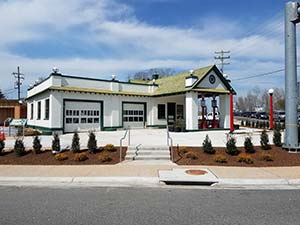
As luck would have it, I visited the newest state park in Virginia (at the time), Machicomoco. A park in its infancy, struggling to get on its feet after Covid. I was impressed with what the park already offered and liked its rural, another-place-in-time feel. As I rounded one corner of the road running through the park, I spied an old green house.
Years ago, I spent a summer interning with the National Trust for Historic Preservation, helping excavate the basement of an old building at Belle Grove in Virginia’s Shenandoah Valley. On weekends, we toured other historic sites and met Trust staff. That experience, along with my interest in historic architecture, instigated my passion for archaeology, history, and preservation.
After that summer, I attended McGill University, majoring in anthropology and taking extra courses in history, architecture, geography, and cartography. When I graduated, jobs in my fields were hard to find. I went back to my last summer job and was rehired at Colonial Williamsburg. There, I was surrounded by 18th-century life and started as an interpreter of domestic crafts. I spun wool and flax, helped with wheat harvests, cooked over an open fire, dipped candles, made oak baskets, and talked with visitors. More opportunities came along—I transcribed court documents for the York County project for several years, then moved into roles where I designed and managed tours and programs in the Historic Area.
But back to the old green house. I toured Timberneck and learned that the Fairfield Foundation manages it. Wanting to learn more, I showed up at the CAPE the following week. That was a Tuesday, and I learned even more about the Fairfield Foundation. On Friday, I visited the Fairfield Archaeology Park and encountered interns, staff, and summer campers. I never quite figured out that summer who was an intern, a staff member, a friend of the staff, a volunteer, or a visitor. All I knew was that everyone was busy, rapid-paced, and friendly.
Now that I’ve been volunteering for almost five years, I’ve done all sorts of volunteer work. I’ve washed artifacts, attended lab nights, helped with summer camps, and even primed ceilings and walls at Timberneck in 95-degree heat—I still think that was some kind of initiation. I’ve excavated and screened for artifacts at Fairfield, Timberneck, Christ Church, Abingdon, Pamunkey, Port Royal, Poropotank, Pharsalia, and King William. It’s hard to pick a favorite because each place offers something new and different.


Christ Church stands out because it was the first site where I had a long-term involvement. The site is unique, and the clay is tough to dig and screen. The thick, unyielding clay became my advantage; few volunteers were willing to tolerate the working conditions, and I had the place to myself. Usually, it was three archaeologists and me. Katie, Evan, and Jackson taught me well and provided so many learning opportunities – and we had a great time. Thank you.
Lately, I’ve spent most of my digging time at Pamunkey and King William. Pamunkey history spans centuries, sits right on the river, and is home to some very welcoming people. Even after wading through soybean fields, working at Pamunkey was an amazing experience. That’s where I found my current favorite artifacts—projectile points. For a while, it seemed like everyone but me was finding them, which they called ‘getting on the board.’ Finally, one afternoon, I got on the board! After that, I started finding points regularly (for a few weeks). King William offers plenty of artifacts, opportunities to interact with the public, and the chance to meet other volunteers.
Another project I really enjoy is working with 19th-century documents written by Catlett family members living at Timberneck. For each document, I conduct background research, transcribe the handwriting, and delve deeper into the context of each document. I’ve worked on a farm journal and ledger, a guardian account, letters between Catlett family members, and various court records. Through this work, I’m helping to build a fuller picture of life at Timberneck in the mid-1800s.

And now it’s January again. I’ll continue to work on the Catlett documents. I’m looking forward to helping out with whatever excavation projects are next in line for the Fairfield Foundation this year. I have several boxes of original documents from the Thruston family that need to be reviewed. Then there are the many families that occupied Rosewell and Fairfield Plantations throughout the 17th to 20th centuries – all sorts of projects I could get involved with. Being a Fairfield Foundation volunteer has opened up my world. I’m incredibly fortunate to have stumbled upon such a great group of people and to get to show up and take part in fascinating projects. Four or five years ago, I could not have predicted how much this experience would change and challenge me, precisely what I needed and wanted!

To Jennifer: Thank you for your dedication and support for preserving history and I look forward to meeting Jennifer in the very near future.
Giles(Andy) Thruston